Why study Chemistry at St Hilda's
At St Hilda's, we have a strong team of chemistry tutors with Fellows in inorganic and in physical and theoretical chemistry and a College Lecturer in organic chemistry. These tutors provide an inspiring and motivating environment, giving guidance throughout the course to enable our students to develop as chemists and achieve their full potential. The chemists in St Hilda's form a vibrant and friendly community with good links between chemistry students in different year groups. There is an annual Chemistry Dinner along with various other social events during the year for all students.
Working life of a Chemistry Student
Lectures are organised by the University Chemistry Department every weekday morning and form an integral part of the course. They are attended by all chemistry students from all colleges. In addition to providing important teaching, lectures are an opportunity to hear an active (and sometimes very eminent) researcher speak about his or her field, often in an interesting and exciting way.
One of the most distinctive features of studying at Oxford is the tutorial system. In addition to attending university lectures, chemistry students will typically have 1-2 tutorials a week in which they meet a tutor in a small group of 2-4 students to discuss work (usually in the form of answers to problem sheets) set by that tutor. First Year students also attend a weekly maths class. Tutorials are great opportunities for students to get individualised attention and work best when students come to them prepared to ask questions, think through problems, and contribute to discussions.
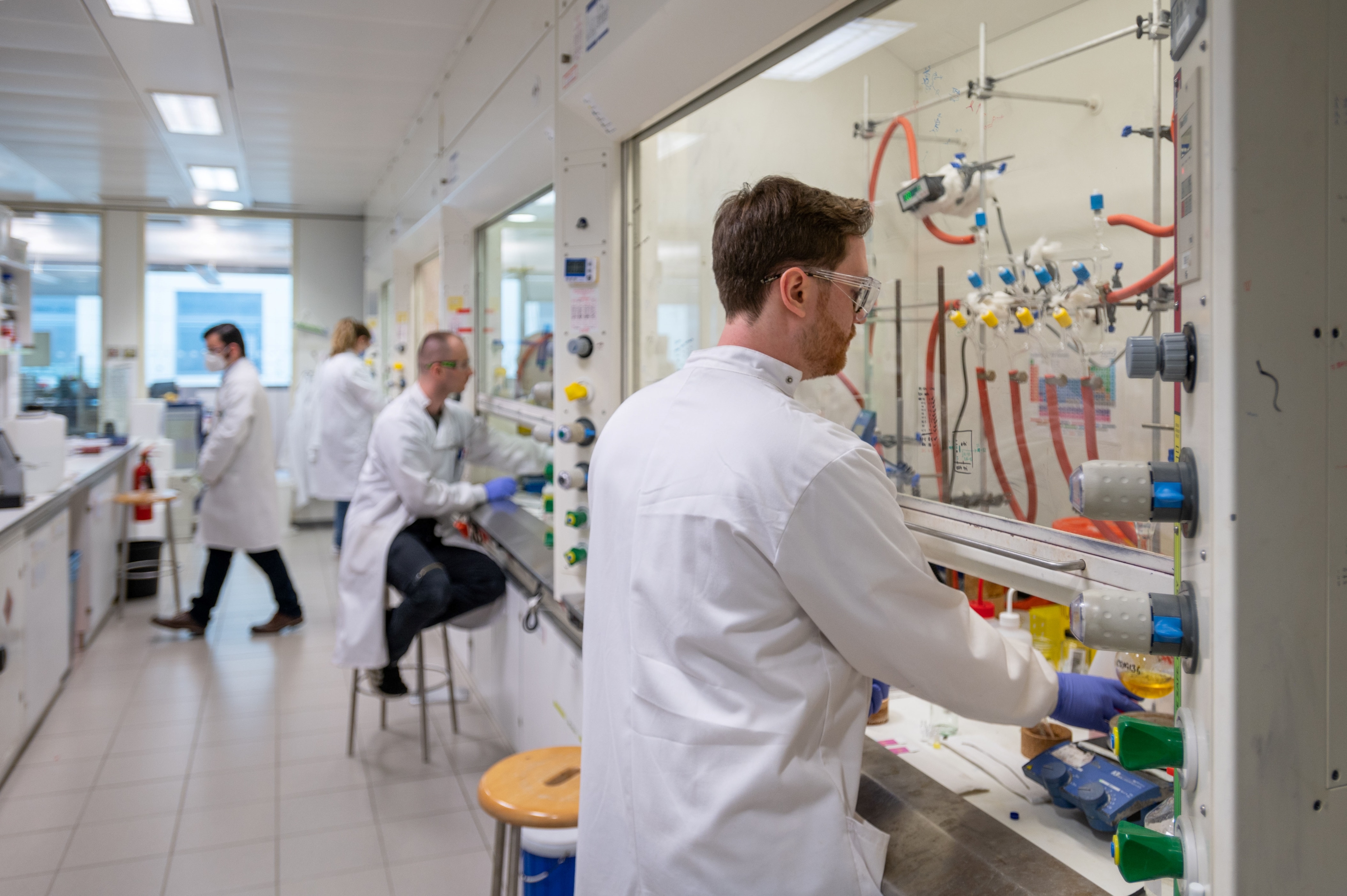
St Hilda's chemists have lab-based practical classes on Mondays and Tuesdays in the Chemistry Teaching Lab. These are an excellent time to see the theory learned in lectures and tutorials in action. The practical course teaches the essential experimental skills, from the synthesis and characterisation of compounds to the operation of spectrometers and other instruments for physiochemical and analytical measurements. The course aims to train students so they are ready to work as professional chemists in a research lab. Students from a number of colleges work together in the lab and so these classes provide a friendly, sociable environment.
St Hilda's has an excellent collection of chemistry textbooks in its library, which can be borrowed during term and also over the vacation. Students are encouraged to submit any requests for new book purchases to their tutors; if a very popular book is on loan, we can usually arrange for extra copies to be bought.
Chemists have a busy schedule but students learn to organise their time effectively so they can successfully manage their workload at the same time as participating in sports, music, clubs or other extracurricular activities.
Chemistry 4th year Part II projects
For many students the final fourth year is the highlight of the chemistry course. During this year students complete a project in one of the chemistry research groups. Wouter and Kathryn describe their experiences of their Part II projects here.
After St Hilda's
Typically about 40 per cent of chemistry graduates remain in the university sector in the first instance, the great majority for further training in research on doctoral programmes. Many of these go on to pursue careers in research and development (in both chemistry and related sciences), others in a variety of positions in management, administration and marketing. Of those taking up employment right away, a high proportion enter the financial services sector as trainee accountants or analysts of various kinds, mostly with the major firms or City institutions. Others go into the IT industry, teaching and consultancy.
Up to 6 places per year
Meet our Academics
You can read more about the course academics via their profiles which can be accessed below.
Chemistry
Chemistry
Chemistry

Chemistry