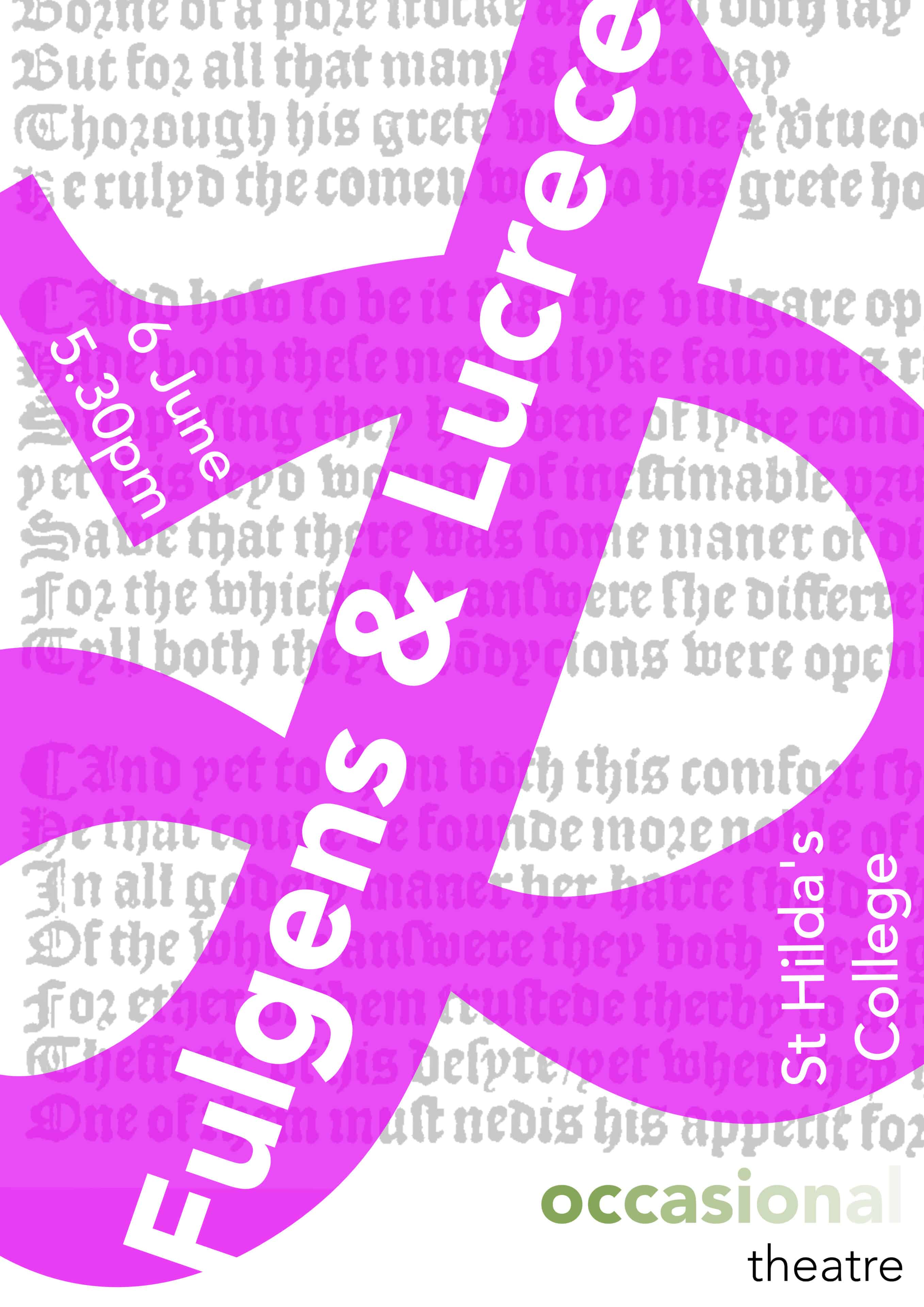
In Trinity term 2026 Dr Patrick Durdel, Junior Research Fellow at St Hilda's College and Postdoc Mobility Fellow in the Faculty of English led the production of a performance of Henry Medwall's play Fulgens and Lucrece.
Dr Durdel writes of a theatrical experiment, a confused audience and laughing at jokes from the 15th Century.
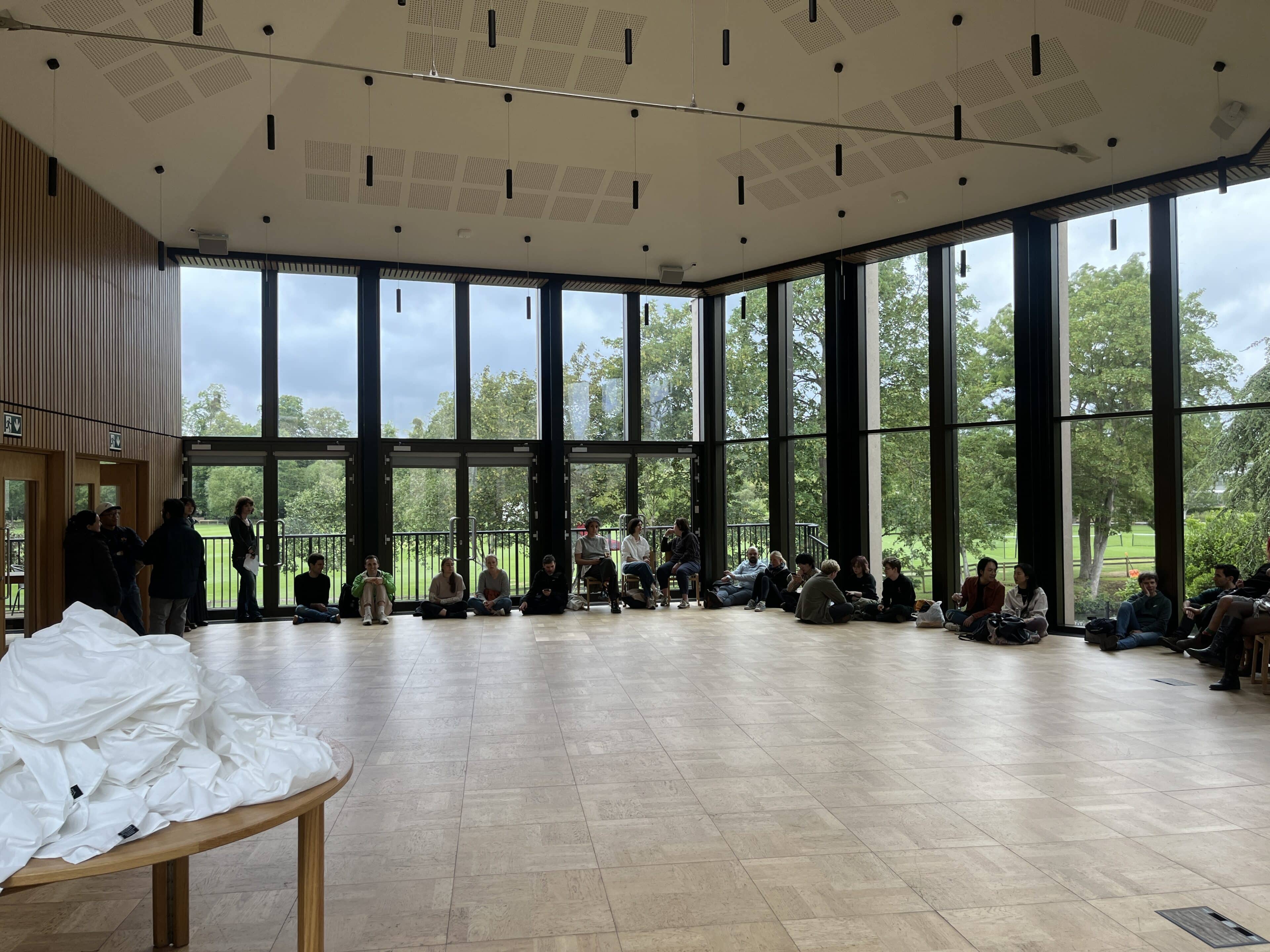
"People were a bit confused: they had come to see a performance of Fulgens and Lucrece in the Pavilion at St Hilda’s, but the room was mostly empty. There was a pile of bedsheets on a table, a few scattered chairs on the sides of the room, but nothing else. As they arrived, people walked through the room, found a place to stand or sit on the floor. The performance was supposed to begin at 5.30pm, but nothing happened. Until one person, who had been sitting on the floor with a group of friends before, stood up to say: ‘A for god’s will / What mean ye sirs to sit to still / Have not ye eaten & your full / and paid nothing there for?’.
On 6 June, four students performed the late fifteenth-century interlude Fulgens and Lucrece in St Hilda’s College’s Pavilion. Directing and rehearsing this production was part of my on-going postdoctoral research for a project that explores the methodological importance of speculation in early modern drama and performance studies. Specifically, the production of Fulgens and Lucrece was an attempt to understand how scholars can use experimental design to answer specific questions about a play or its performance context.
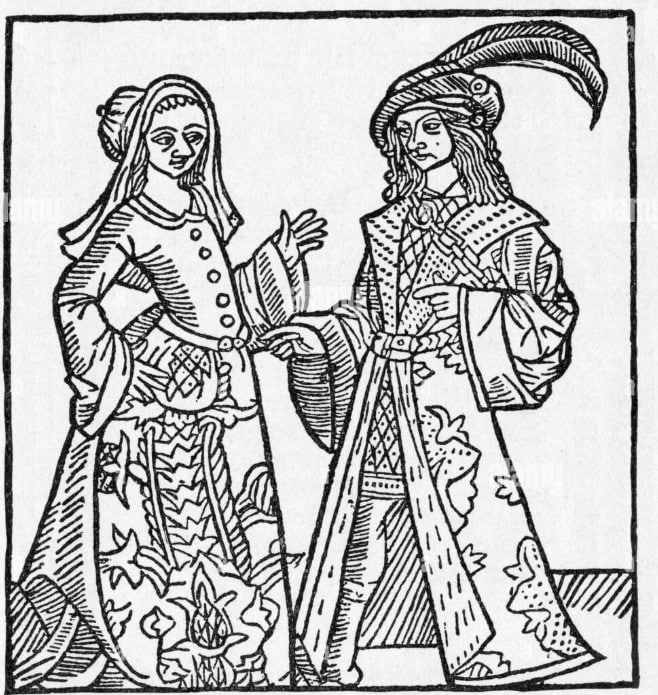
Fulgens and Lucrece was written by Henry Medwall in the 1490s and (likely) performed around the same time. The play was printed between 1512 and 1516 and the only surviving copy is the oldest printed play in English that we know of. The play is an interlude, a specific dramatic genre from the Tudor period. These interludes were written for specific occasions (such as a banquet or other festivities) and performed once, often in the great hall of a large estate, palace, or the Inns of Court. Interludes were part of the entertainment programme in these mixed-use spaces, without a stage, where people were also eating, drinking, and talking to each other. This is one of the reasons why the texts of these interludes often contain very explicit ways of directing attention and taking up space for the performance.
It is hard to recreate something like this during a performance today, primarily because we have very strong preconceptions about what a theatrical performance is, ones that do not necessarily map onto how Fulgens and Lucrece was performed more than 500 years ago. I chose the Pavilion for the performance because it always feels like a very open and functionally flexible space. I wanted to use the entirety of the space (instead of just a stage) and to give the audience the opportunity to decide for themselves how they want to position themselves towards the performance, without establishing a firm framework or rule (something that would already happen, for example, when we put up rows of chairs).
During rehearsals, we spent a lot of time moving through the room, developing strategies for establishing a performance space when there is no clearly demarcated stage, and thinking about how to deal with the audience that will be in the same space.
During the performance, it was very interesting to observe how easily the people in attendance became an audience. Most people were sitting on the floor and did not even move much when the actors would perform a scene exactly where they were sitting. While people obviously had a good time, laughing at jokes that were written in the fifteenth century and that the actors made work in the present, the theatrical experiment that was running in the background thus yielded mixed results: the audience obviously found it very easy to behave as an audience, even when we stripped away almost everything to be expected from a normal theatrical experience.
As I do further work for the project, I will use insights from this performance to further explore how practice-as-research performances can defamiliarise audiences with their preconceptions about what it means to be an audience.
We rehearsed Fulgens and Lucrece during Trinity term with weekly rehearsal on Monday evenings and I was able to offer the participating students dinner in the dining hall, thanks to the Research Committee funding. The performance was free and open to the public and about forty people came to see the play. During rehearsals and the performance, I took notes for my project and I also conducted an interview with the actors a few days after the performance. The notes, interview, and other material from the rehearsal process will be an important part of the book that will be the result of my research project."
Watch Dr Durdel and Phoebe (who plays Lucrece) explain a bit more about Fulgens and Lucrece below: