St Hilda's College
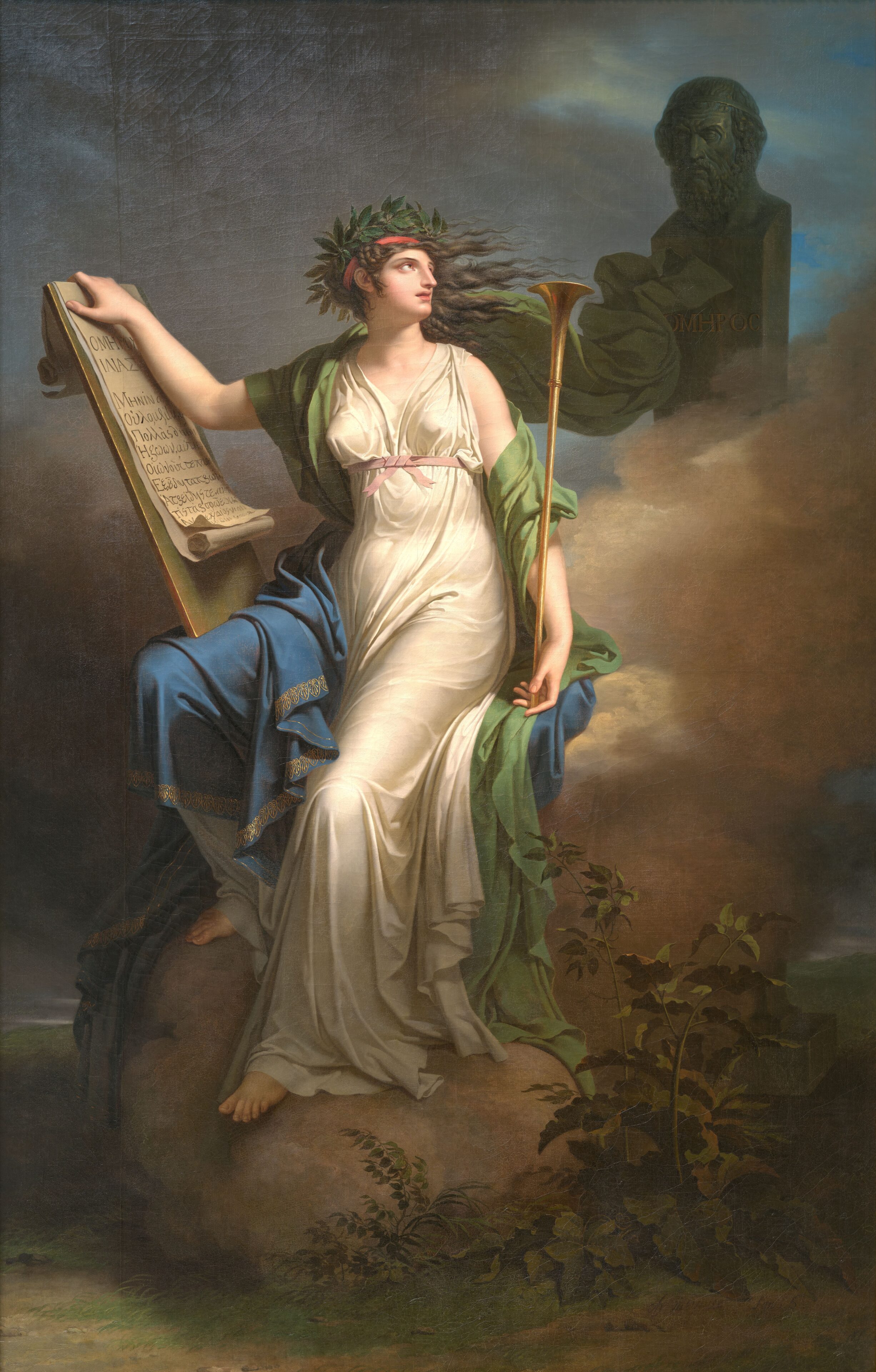
Christopher Nolan’s The Odyssey is all the rage right now, and rightly so: it retells one of the most famous ancient myths in a way that speaks to contemporary concerns. Most discussion has focused on how faithful the film is to Homer’s plot and characters. In this article, St Hilda’s Fellow Tom Nelson, shows how Nolan also adapts Homer’s craft of storytelling.
NB - Spoilers ahead for Nolan’s The Odyssey.
Homer’s Odyssey derives from a tradition of oral performance in which singers could expand or contract the same tale concertina-like, depending on the occasion. Christopher Nolan’s The Odyssey is a descendant of that same tradition. The film may be epic in length for its genre (almost three hours), but the original Odyssey would have taken much longer to perform: it has been estimated by Oliver Taplin that a full performance in Greek would take over 20 hours, while the audiobook of Emily Wilson’s recent English translation lasts over 13 hours. To squeeze such vast Homeric material into a new medium, Nolan had to make significant choices about what to cut or include in his retelling of this famous myth, especially since he also adds in elements from other sources, such as Virgil’s account of Troy’s fall in the Aeneid.
Reviewers have highlighted various aspects of these choices: the film is resolutely androcentric in its focus, minimising the importance and agency of female characters; the gods are decentred, left to work behind the scenes (even Athena appears almost a figment of Odysseus’ imagination); and Matt Damon’s Odysseus is less a scheming trickster, and more a traumatised war veteran, coming to terms with the havoc that he has wrecked on the world Oppenheimer-style. Indeed, the whole film is suffused with echoes of Nolan’s own earlier oeuvre.
In this piece, I want to ask a question that has received much less attention: how do Nolan’s adaptations impact the broader structure of the story?
Homer’s Craft: Narrative Doublets and Triplets
The Odyssey is a narratively complex poem, jumping around in both time and space – which is very much up Nolan’s street. But it is also a highly episodic tale, especially when it comes to Odysseus’ account of his fantastical adventures. To prevent such a sequential plot from becoming boring, Homer (like oral poetry more generally) had various techniques to give shape and progression to his narrative. One of the most important of these is what scholars call ‘doublets’ and ‘triplets’, parallel scenes and mirrored characters that thread through the poem; the subtle variations between such repetitions create a powerful sense of momentum and foreshadowing.
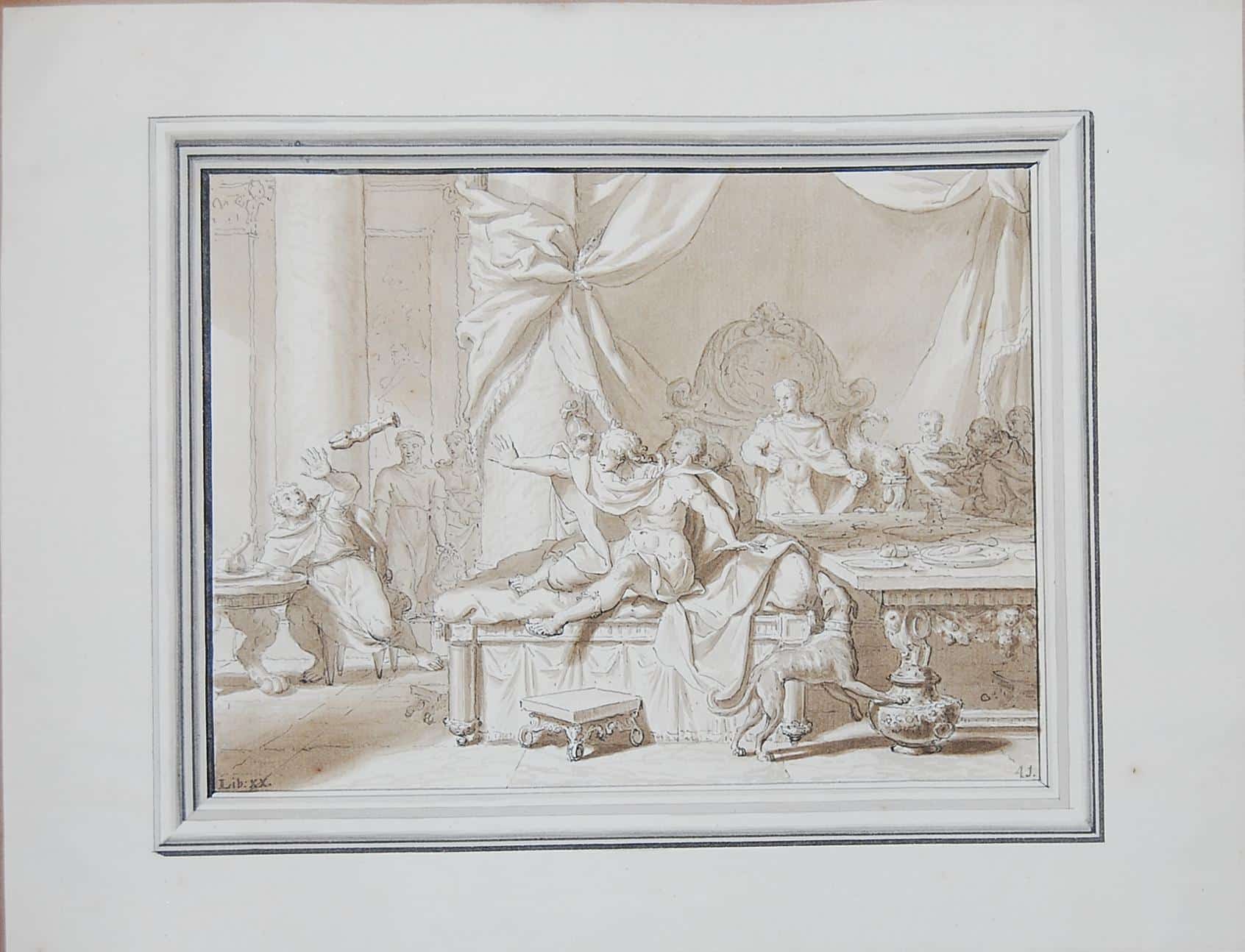
A prime example in the second half of Homer’s poem involves three occasions where a suitor throws something at the disguised Odysseus: two foot-stools and an ox-hoof. What makes this repeated pattern interesting is the development across them: with each iteration, the suitors’ throw becomes increasingly ineffective, just as the reaction of Odysseus’ son Telemachus becomes increasingly authoritative. The shift reflects how the suitors are gradually losing their grip on the palace and how Odysseus’ household is reasserting itself, preparing audiences for the impending climactic face-off between Odysseus and the suitors.
Doublets and Triplets in Nolan’s The Odyssey
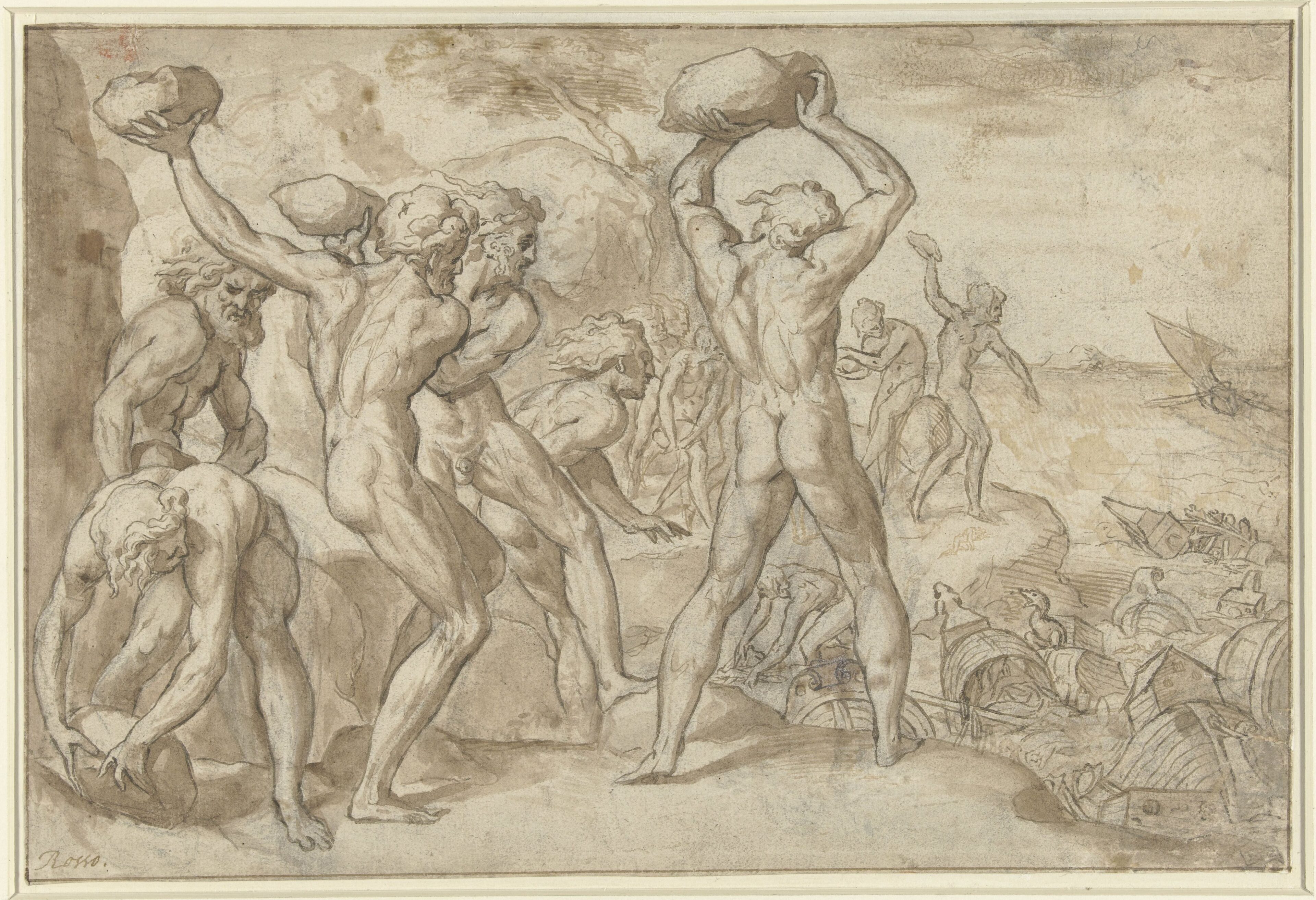
Nolan had to compress many of these repeated patterns to fit the demands of his medium. Take the suitor-missile example: now only one suitor throws a stool at the disguised Odysseus. And there are many other cases where such Homeric repetitions are cut or downplayed. In the original Homeric poem, the Laestrygonians are a doublet for the Cyclops Polyphemus: they are both cannibalistic, boulder-throwing giants. In Nolan’s version, the Laestrygonians have instead become heavily armoured knights – an emblem of the brutality of technological advancement, but no longer a close echo of the Cyclops. One of the few preserved doublets in Nolan’s film involves the parallel between Odysseus’ crew and Penelope’s suitors, who both suffer for their wrongdoing, here keyed especially through their excessive consumption. The Circe scene offers a particularly graphic display of the crew’s animalistic over-consumption that matches the ever-feasting suitors.
Yet for all this reduction and streamlining, Nolan’s adaptations to the plot draw heavily on this very same Homeric technique. Let’s start with three brief examples. First, Telemachus’ thrice-repeated phrase ‘you have wise eyes, Athena’s eyes’, used first to a stranger, then to his guardian Mentor, and finally to his disguised father (a clear climax there). Odysseus dismisses his son’s attempts to look for gods among men (‘you’ll be disappointed’), but the irony is that in Homer’s original, both the stranger and Mentor were in fact Athena in disguise! Second, there are the three occasions where the crew frantically retreat to the shore, pursued by the Cyclops, the Laestrygonians, and the legions of unburied dead – a sequence that ultimately blurs the distinction between man and monster; in each case, the pursuer becomes increasingly human. And third, there’s Odysseus’ repeated plucking of his lyre-like bow to warn his prey; here too, that prey becomes increasingly human: from the boar, to the stag-cum-man on Circe’s island, to the suitors themselves.
But the best example of this technique comes in Nolan’s scene at Pylos.
The Ambush at Pylos
In Homer’s Odyssey, Telemachus heads out to see both Nestor at Pylos and Menelaus at Sparta, searching for news of his father. Nolan cuts the Nestor scene to focus on Telemachus’ meeting with Menelaus and Helen. But on the way back, he still has Telemachus pop by Pylos to visit a sanctuary of Athena, where the suitors have laid an ambush for him. Only through the disguised Odysseus’ swift intervention does Telemachus escape, as the father-son pair leave a burning shrine and dead bandits in their wake. There is nothing like this in Homer: the suitors plot against Telemachus at sea, but their threat proves a non-event; he simply avoids their trap. By contrast, Nolan has upped the stakes and importance of this plot detail.
At first glance, this new episode feels thoroughly un-Homeric. One reviewer has even dismissed it as ‘really outrageous’. But it again builds on the Homeric doublet technique. This clash with the suitors’ bandits prepares for Odysseus’ much bigger conflict with the suitors that follows, anticipating that climactic clash much like the suitors’ triple throw in Homer’s original. In addition, this desecration of Athena’s temple parallels Nolan’s depiction of the sack of Troy itself, where Athena’s statue is heinously decapitated: in both cases, the goddess’ temple is left in flames. The echo reinforces one of the film’s central ideas: that moral rot and societal collapse reverberate out from the sack of Troy. This scene shows how the decay of “Zeus’ law” (the Greek value of guest-friendship) is seeping through Greek society itself.
Seeking Closure
In this very un-Homeric scene, then, Nolan is following a Homeric framework. But even here, we still find a striking twist. It has been shown by Adrian Kelly that early Greek epic often ends with a diminuendo: since oral tales could always continue with another episode, poets achieved closure by ending with a smaller, self-contained doublet that helped tie things together. In Homer’s Odyssey, this comes in the form of Odysseus’ clash with the suitors’ relatives: after the bloodbath of the suitor-massacre, Odysseus now kills only one person (the head-suitor’s father), before the gods intervene to stop any further slaughter. Nolan’s blockbuster epic predictably avoids this detail; instead, he ends on a climax, with Odysseus’ solo killing of the suitors, followed by a brief resolution, in which Odysseus sails off into exile with Penelope, leaving Telemachus as king. Nolan’s ending partly draws on ancient non-Homeric variants to the myth, where Odysseus had to face the consequences of his violence at Ithaca. But the film’s conclusion also draws on one last Homeric pattern: ‘ring composition’, where an ending echoes its beginning. Early in Nolan’s film, Penelope suggests that she and Odysseus should sail off into the sunset to avoid Odysseus’ involvement in the war at Troy. Odysseus dismisses this possibility, but Penelope’s vision is finally realised upon their reunion, as the couple sail off to the west, with an explicit verbal and visual echo of that earlier moment. After twenty years of suffering and loss, things come full circle.
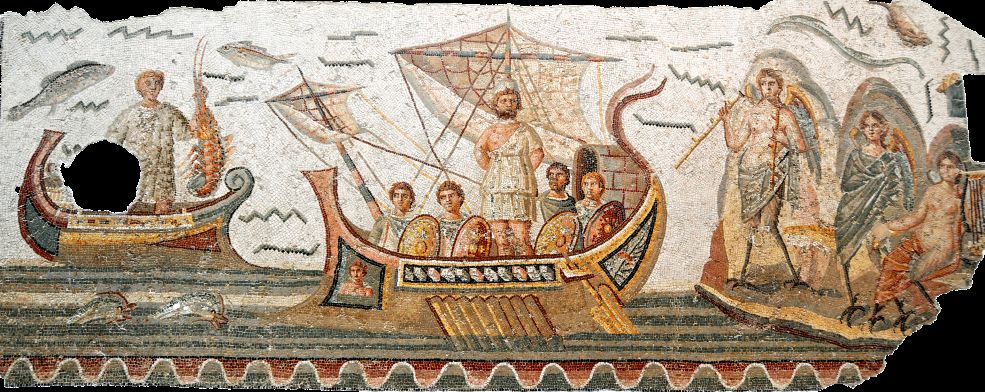
Amid all his inevitable changes to the Homeric original, then, Nolan ultimately draws in his own way on the spirit and techniques of oral composition – an inheritance that he highlights by opening the film with the performance of Phemius, the bard on Ithaca, played by Travis Scott. As Scott beats his stick to the rhythms of Homer’s dactylic hexameter, Nolan begins by echoing the sound of Homer’s Greek epic, whose structures he appropriates through the rest of his film.
For another discussion of Nolan’s Odyssey by St Hilda’s Fellow Pantelis Michelakis, see here. And for more on Homeric narrative technique in Nolan’s film, watch the video below:
Tom Nelson is Career Development Fellow in Ancient Greek at St Hilda’s College, Oxford. His research explores how ancient authors reshaped their inherited traditions and signalled their engagement with earlier works – precisely what Nolan does in his film.